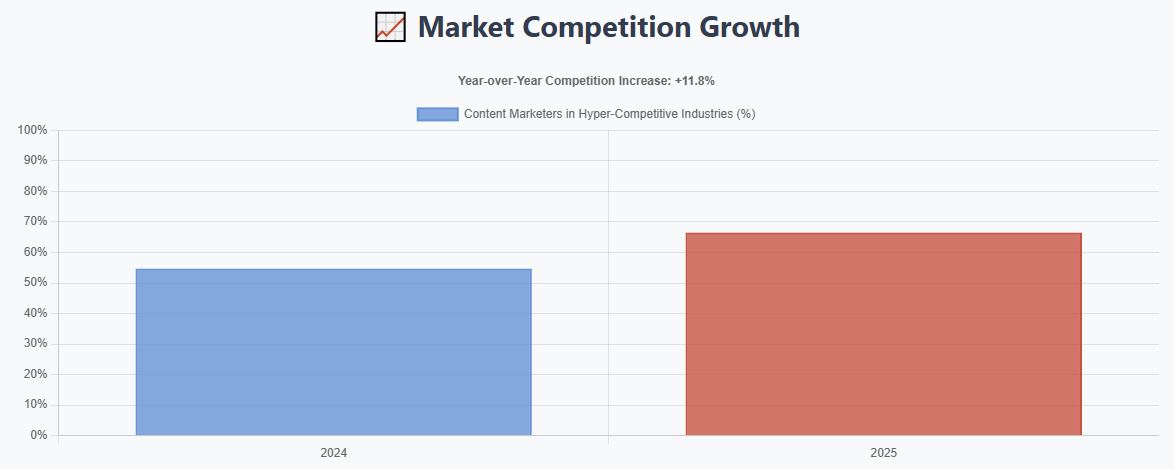
The stakes for organic traffic have never been higher. With 66.5% of content marketers now operating in hyper-competitive industries, up from 54.7% in 2024, the battle for search visibility has intensified dramatically. Yet organic search remains the most valuable traffic source for sustainable business growth—delivering qualified prospects who are actively seeking your solutions.
Unlike paid advertising that stops delivering results the moment you stop paying, organic traffic builds compound value over time. A well-optimized piece of content published today can continue driving traffic and conversions for years to come, making SEO one of the highest-ROI digital marketing investments available.
This comprehensive guide reveals the exact strategies you need to dominate organic search in 2025, from foundational technical optimizations to advanced AI-era tactics.
Understanding Organic Traffic: The Foundation
Organic traffic consists of visitors who find your website through unpaid search engine results. When someone types a query into Google and clicks on your listing (not an ad), that’s organic traffic. This traffic is incredibly valuable because it represents people actively searching for information, products, or services related to your business.
Why Organic Traffic Matters:
- High Intent: Searchers are actively looking for solutions
- Cost-Effective: No ongoing ad spend required
- Sustainable: Results compound over time
- Trustworthy: Users trust organic results more than ads
- Scalable: One piece of content can rank for multiple keywords
How Search Engines Work
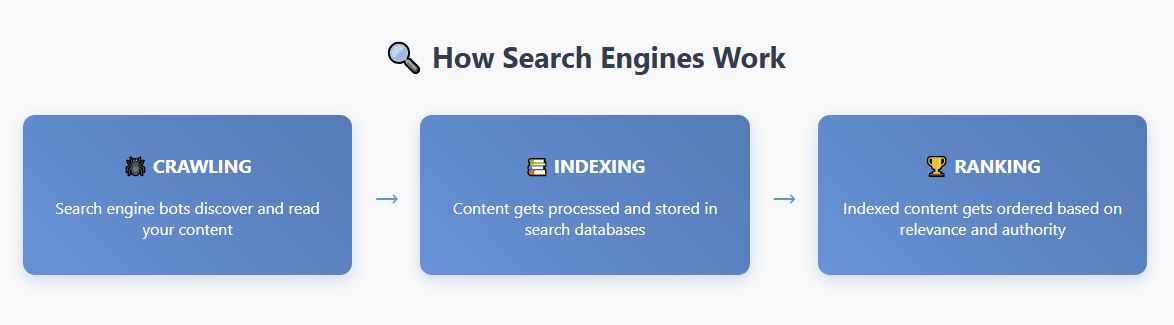
Understanding the three-stage process search engines use helps you optimize effectively:
- Crawling: Search engine bots discover and read your content
- Indexing: Content gets processed and stored in search databases
- Ranking: Indexed content gets ordered based on relevance and authority
Each stage presents optimization opportunities. Technical SEO ensures efficient crawling and indexing, while content quality and authority signals influence ranking.
Content Strategy That Converts
Master User Intent
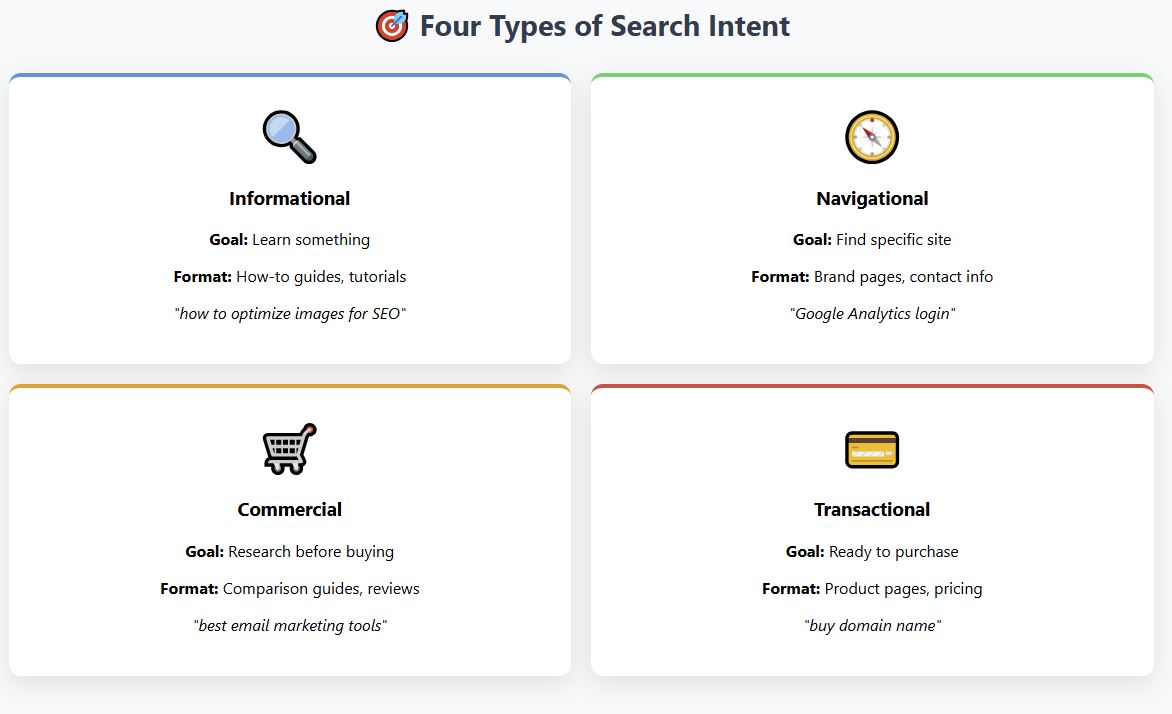
The biggest shift in modern SEO is the move from keyword-focused to intent-focused optimization. Only 5.4% of Google AI Overviews contain exact query matches, proving search engines now prioritize understanding context over literal keyword matching.
Create E-E-A-T Compliant Content
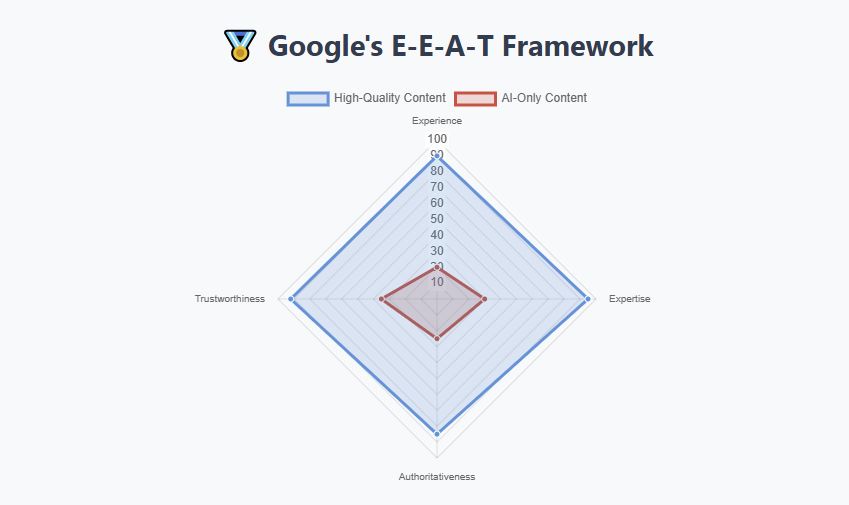
Google’s E-E-A-T framework (Experience, Expertise, Authoritativeness, Trustworthiness) has become critical for ranking success. Generic, AI-only content fails because it lacks these human-derived signals.
Experience: Demonstrate real-world experience through case studies, personal anecdotes, and practical examples.
Expertise: Provide factual, well-researched content. Include author credentials and cite authoritative sources.
Authoritativeness: Build recognition as a trusted source through high-quality backlinks and industry mentions.
Trustworthiness: Ensure site security (HTTPS), transparent policies, and genuine testimonials, especially for YMYL (Your Money or Your Life) topics.
Content Optimization Checklist
- Target one primary keyword per page with related secondary terms
- Use clear heading structure (H1, H2, H3) that includes keywords naturally
- Write compelling meta descriptions under 155 characters
- Optimize images with descriptive alt text and proper file names
- Include internal links to relevant pages using descriptive anchor text
- Add multimedia elements like images, videos, and infographics
- Ensure readability with short paragraphs and bullet points
Strategic Content Refreshing
Content creation isn’t a one-time task. Regular updates keep your content competitive and relevant:
- Conduct quarterly content audits to identify improvement opportunities
- Update outdated statistics and information
- Add new sections based on emerging trends or questions
- Improve formatting for better user experience
- Expand thin content with additional depth and value
Technical SEO Excellence
Technical SEO creates the foundation that allows your content to be discovered and ranked. Without proper technical optimization, even the best content may never reach its audience.
Site Structure and Crawlability
XML Sitemaps: Submit comprehensive sitemaps to Google Search Console to guide crawlers to your important pages.
Robots.txt: Use this file to direct crawlers away from irrelevant pages and conserve crawl budget for important content.
Internal Linking: Create strategic connections between related pages using keyword-rich anchor text. This distributes authority and helps search engines understand content relationships.
URL Structure: Keep URLs short, descriptive, and keyword-focused. Avoid complex parameters or deep folder structures.
Core Web Vitals Optimization
Google’s Core Web Vitals
Google’s Core Web Vitals directly impact rankings and user experience. These metrics measure real user experience across three dimensions:
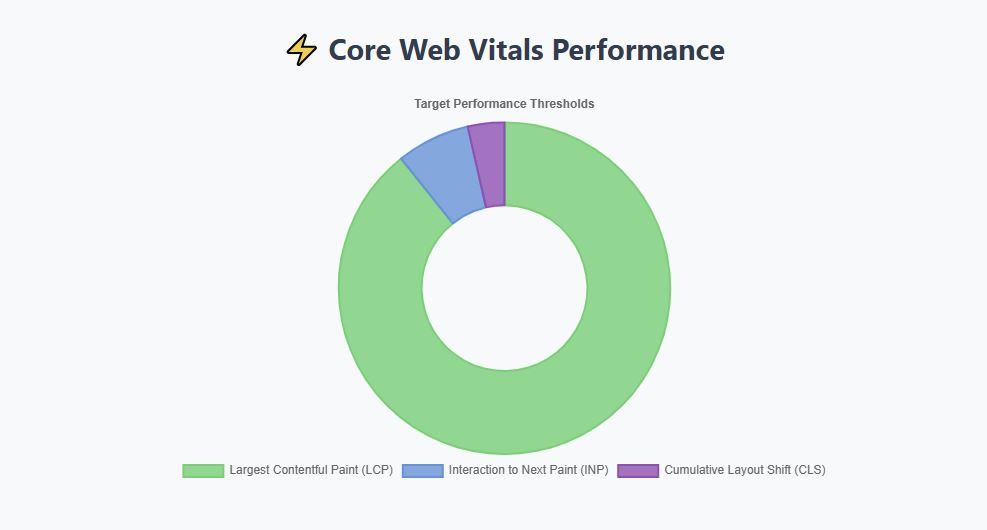
Largest Contentful Paint (LCP): Measures loading performance. Target 2.5 seconds or less.
- Optimize images and use modern formats (WebP)
- Minimize render-blocking CSS and JavaScript
- Use a reliable hosting provider
Interaction to Next Paint (INP): Measures responsiveness to user interactions.
- Minimize JavaScript execution time
- Use code splitting for non-critical resources
- Optimize event handlers
Cumulative Layout Shift (CLS): Measures visual stability. Target 0.1 or less.
- Set size attributes for images and videos
- Avoid dynamically injected content
- Preload fonts to prevent layout shifts
Mobile-First Optimization
With Google’s mobile-first indexing, your mobile experience determines your search rankings. This isn’t optional—it’s fundamental.
Key Mobile Optimizations:
- Implement responsive design that adapts to all screen sizes
- Ensure text is readable without zooming
- Make buttons and links easily tappable
- Avoid intrusive pop-ups on mobile
- Optimize page speed for slower mobile connections
HTTPS Security
HTTPS is both a ranking factor and a trust signal. Users and search engines prefer secure sites.
Implementation Steps:
- Obtain an SSL/TLS certificate
- Ensure all resources load over HTTPS
- Implement 301 redirects from HTTP to HTTPS
- Update internal links to use HTTPS
Building Authority Through Quality Links
Backlinks remain one of the strongest ranking signals, acting as votes of confidence from other websites. However, the focus has shifted decisively from quantity to quality.
White-Hat Link Building Strategies
Create Linkable Assets: Develop content that naturally attracts links:
- Original research and data studies
- Comprehensive guides and resources
- Interactive tools and calculators
- Industry surveys and reports
Broken Link Building: Find broken links on relevant sites and suggest your content as a replacement. This provides value to the site owner while earning you a quality backlink.
Resource Page Link Building: Identify resource pages in your industry and pitch your valuable content for inclusion.
Guest Content Creation: Write high-quality articles for authoritative sites in your niche. Focus on providing value rather than just getting links.
Digital PR: Create newsworthy content and reach out to journalists and industry publications for coverage.
Link Quality Factors
Not all links are equal. Focus on:
- Relevance: Links from sites in your industry or niche
- Authority: Links from established, trusted domains
- Context: Links within relevant content, not site-wide footers
- Natural anchor text: Varied, descriptive text that flows naturally
User Experience and Engagement Signals
Search engines increasingly use user behavior signals to evaluate content quality. Sites that engage users and meet their needs rank higher.
Key UX Metrics
Dwell Time: How long users stay on your page after clicking from search results. Longer dwell times suggest your content matches user intent.
Bounce Rate: The percentage of visitors who leave after viewing one page. While context matters, generally lower bounce rates indicate better user satisfaction.
Click-Through Rate (CTR): The percentage of people who click your listing in search results. Higher CTRs signal that your titles and descriptions are compelling and relevant.
Improving User Engagement
- Write compelling headlines that match search intent
- Use clear, scannable formatting with headers and bullet points
- Include relevant internal links to encourage further exploration
- Add multimedia content to enhance engagement
- Ensure fast loading times to prevent user frustration
- Optimize for mobile experience across all devices
Social Signals and SEO
While social media links don’t directly impact rankings, social signals influence SEO indirectly:
- Amplified Content Reach: Social sharing increases content visibility and potential link acquisition
- Brand Recognition: Strong social presence builds brand awareness and search demand
- Traffic Generation: Social platforms drive visitors who may engage with your content
- Content Validation: Social engagement can signal content quality to search engines
Measurement and Continuous Improvement
Successful SEO requires ongoing measurement and optimization. Set up proper tracking to monitor progress and identify opportunities.
Essential Analytics Setup
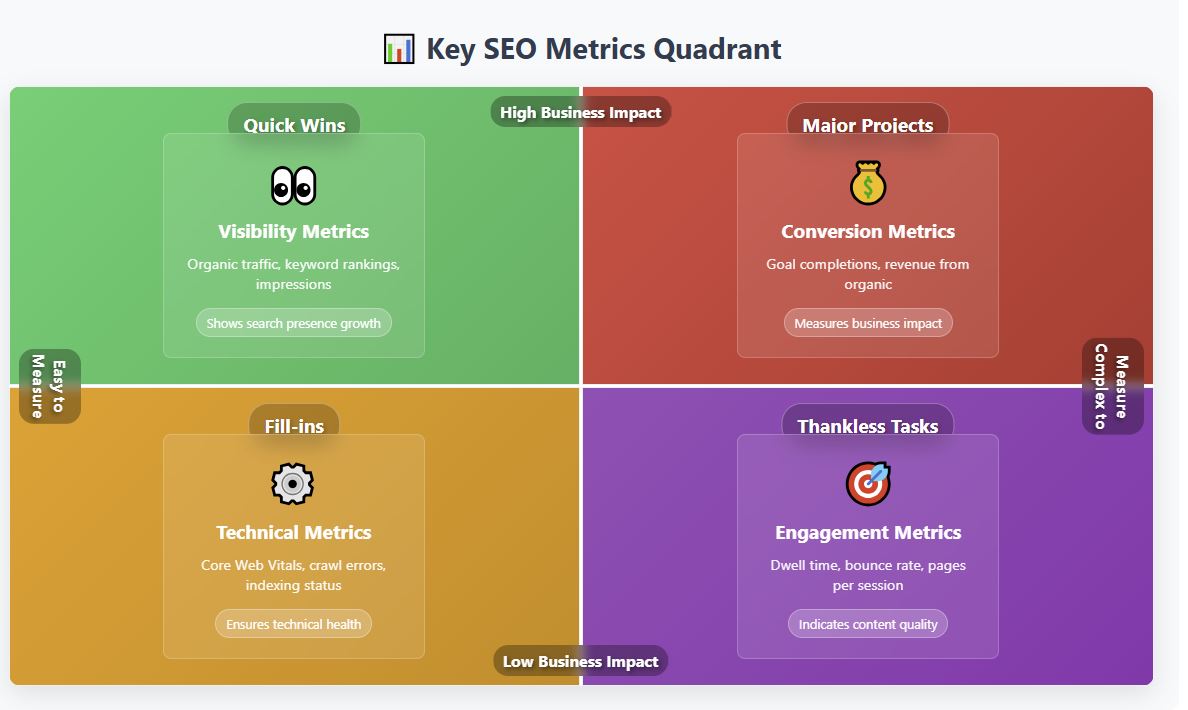
Google Search Console: Monitor your site’s search performance, including:
- Search queries bringing traffic
- Click-through rates and average positions
- Indexing status and crawl errors
- Core Web Vitals performance
Google Analytics 4: Track user behavior and conversion metrics:
- Organic traffic volume and trends
- User engagement metrics (session duration, pages per session)
- Conversion rates from organic traffic
- Top-performing landing pages
📈 Key Metrics to Track
Identifying Improvement Opportunities
Content Gap Analysis: Use keyword research tools to find topics your competitors rank for but you don’t cover.
Technical Audits: Regularly check for crawl errors, broken links, and speed issues using tools like Screaming Frog or Semrush.
Competitor Analysis: Study top-ranking competitors to understand their content strategies and link profiles.
Performance Monitoring: Track ranking changes and correlate them with your optimization efforts to understand what works.
Future-Proofing Your SEO Strategy
The search landscape continues evolving rapidly. Stay ahead by understanding emerging trends and preparing for future changes.
AI’s Impact on Search
Google’s AI Overviews and other AI-powered features are changing how users interact with search results:
- Decreased Click-Through Rates: AI summaries may reduce clicks for some informational queries
- Authority Citations: Being cited in AI overviews becomes a new form of visibility
- Content Quality Premium: AI makes original, expert content more valuable than ever
- Multi-Modal Content: Text, video, audio, and images all contribute to AI understanding
Preparing for Algorithm Updates
Google releases numerous algorithm updates annually. Stay resilient by:
- Focusing on fundamentals: Quality content, technical excellence, and user experience
- Monitoring performance: Watch for sudden traffic changes that may indicate algorithm impacts
- Staying informed: Follow official Google communications and reputable SEO news sources
- Diversifying strategies: Don’t rely on any single optimization tactic
Emerging Trends to Watch
Voice Search Optimization: Optimize for conversational queries and featured snippets.
Video Content Priority: 45% of marketers report video performs best—integrate video into your content strategy.
Local SEO Growth: Even non-local businesses benefit from location-based optimization.
Answer Engine Optimization: Prepare for platforms like ChatGPT and Perplexity becoming traffic sources.
Your Organic Traffic Action Plan
Improving organic traffic requires sustained effort across multiple areas. Here’s your roadmap:
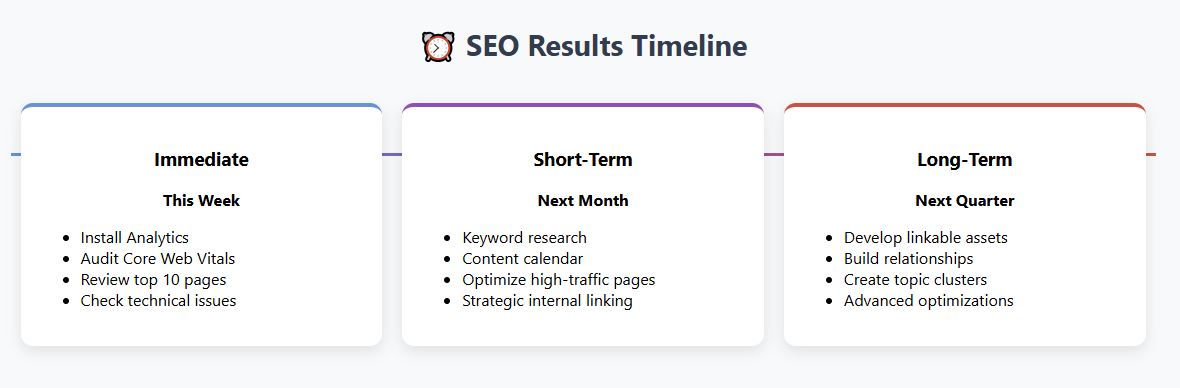
Immediate Actions (This Week)
- Install Google Search Console and Analytics if not already done
- Audit your site’s Core Web Vitals using PageSpeed Insights
- Review your top 10 pages for basic on-page optimization
- Check for critical technical issues like crawl errors or indexing problems
Short-Term Implementation (Next Month)
- Conduct comprehensive keyword research targeting user intent
- Create a content calendar focused on your audience’s needs
- Optimize your highest-traffic pages for better conversion
- Begin strategic internal linking to distribute page authority
Long-Term Strategy (Next Quarter)
- Develop linkable assets that naturally attract backlinks
- Build relationships with industry publications and influencers
- Create comprehensive topic clusters to establish topical authority
- Implement advanced technical optimizations like schema markup
The Path to Organic Growth
Organic traffic improvement in 2025 requires a holistic approach that balances technical excellence with user-focused content creation. The brands that succeed will be those that understand their audience deeply, create genuinely valuable content, and maintain technical standards that support excellent user experiences.
Remember: SEO is a marathon, not a sprint. Most SEO efforts take 3-6 months to show significant results, with full impact often taking 6-12 months. But the investment pays dividends—well-optimized content can drive traffic and conversions for years.
Start with one area, implement systematically, and measure results. Small, consistent improvements compound into significant competitive advantages. Your organic traffic growth journey begins with the first optimization you implement today.
The question isn’t whether you’ll face SEO challenges—it’s how you’ll turn them into opportunities for sustainable growth.
[/et_pb_text][/et_pb_column][/et_pb_row][/et_pb_section]