What Exactly Is Organic Traffic?
Organic traffic refers to visitors who land on your website through unpaid search engine results. When someone searches for information on Google, Bing, or Yahoo and clicks on a regular (non-ad) link that leads to your site, that’s organic traffic.
Unlike paid traffic that stops when you stop paying, organic traffic continues flowing to your site based on your content’s relevance and value to searchers.
The key characteristics of organic traffic include:
- Comes from search engines, not advertising
- Results from ranking in natural search results
- Driven by SEO and content quality
- Doesn’t require direct payment per visitor
Why Organic Traffic Is Crucial for Website Success
1. Cost-Effective with High ROI
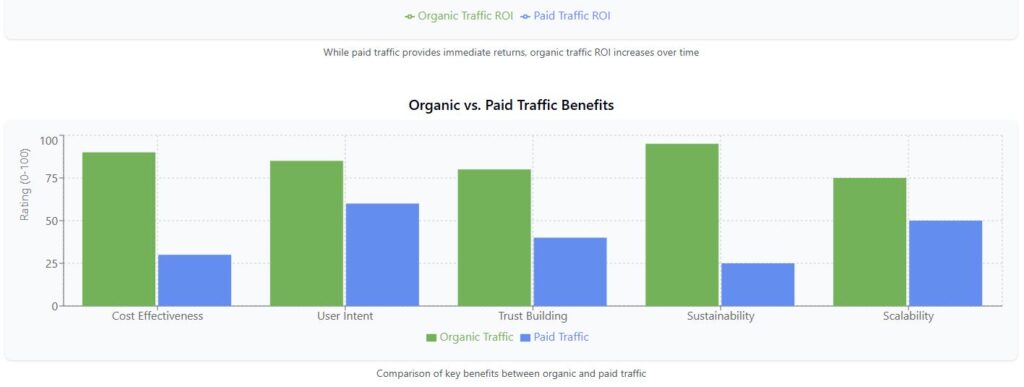
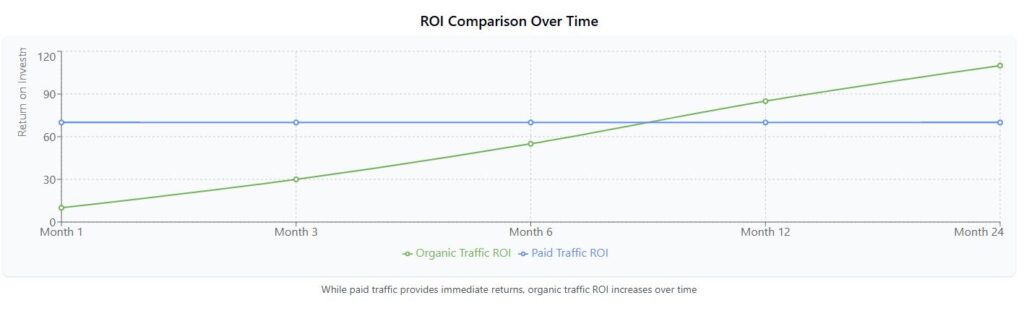
While paid ads require continuous investment to maintain visibility, organic traffic is essentially free after your initial content creation and optimization costs. This makes it one of the most cost-effective marketing channels available.
The math is simple:
- Paid traffic: Pay for every click, forever
- Organic traffic: Create valuable content once, receive visitors for months or years
A well-optimized page can attract thousands of visitors over time without additional costs, delivering exceptional return on investment that improves the longer your content remains relevant.
2. Brings High-Intent, Ready-to-Convert Visitors
People finding you through search are actively looking for what you offer. This active search indicates high intent, making these visitors more likely to:
- Spend more time on your site
- Engage with your content
- Complete desired actions (purchases, sign-ups, etc.)
- Return for future needs
When someone searches for “best running shoes for flat feet” and finds your product page, they’re much closer to making a purchase than someone who simply sees your ad while browsing social media.
3. Builds Trust and Authority
Ranking high in organic search results signals credibility to potential customers. Users tend to trust organic search results more than advertisements, viewing top-ranking sites as authorities in their field.
This perception of authority:
- Increases brand trust
- Improves customer confidence
- Enhances industry reputation
- Builds long-term customer relationships
As your site consistently appears for relevant searches, your brand becomes synonymous with expertise in your niche.
4. Provides Sustainable, Long-Term Growth
Unlike temporary traffic spikes from paid campaigns, organic traffic offers sustainable growth. While it takes longer to build initially, the benefits continue long after your content is published.
The sustainability advantage:
- Traffic continues flowing without ongoing payments
- Results compound as you add more optimized content
- Less vulnerable to budget constraints or market fluctuations
- Creates a solid foundation for business growth
This long-term approach provides stability that paid strategies alone can’t match.
5. Creates Competitive Advantage
When you rank highly for valuable keywords, you’re not just gaining visibility—you’re taking it away from competitors. Each top position you secure means one less opportunity for competitors to capture that traffic.
Over time, strong organic presence:
- Increases market share
- Reduces customer acquisition costs compared to competitors
- Makes it harder for new competitors to break into the market
- Establishes your brand as the go-to resource
6. Offers Measurability and Scalability
Modern analytics tools make it easy to track organic traffic performance, enabling data-driven optimization. You can measure exactly which content attracts visitors, how they behave, and what leads to conversions.
As your site authority grows, organic traffic typically scales without proportional cost increases. Each new piece of quality content benefits from your site’s established authority, making it easier to rank for competitive terms over time.
Organic Traffic vs. Other Traffic Sources
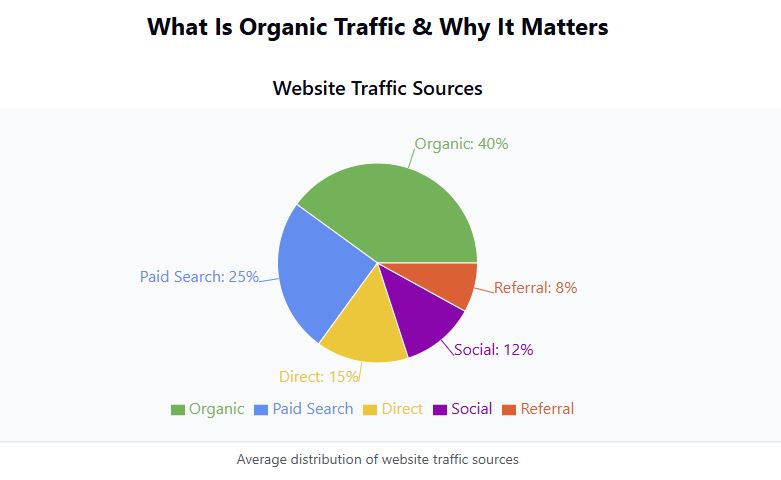
Each traffic source has distinct advantages and roles in your marketing strategy:
| Traffic Source | How It Works | Key Benefits | Limitations |
| Organic | Unpaid search engine results | Cost-effective, high-intent visitors, sustainable | Takes time to build |
| Paid Search | Visitors from search ads | Immediate visibility, precise targeting | Stops when you stop paying |
| Direct | Users typing URL or using bookmarks | Shows brand loyalty, high engagement | Limited to existing audience |
| Social | Visitors from social platforms | Good for awareness, community building | Often lower purchase intent |
| Referral | Visitors from links on other sites | Builds authority, creates partnerships | Dependent on other websites |
While all these sources have value in a comprehensive strategy, organic traffic often delivers the best combination of quality, sustainability, and return on investment.
How to Increase Your Organic Traffic
To boost your organic traffic:
- Research and target relevant keywords your audience actually searches for
- Create high-quality, valuable content that serves user needs
- Optimize your website technical structure for search engines
- Build quality backlinks from reputable websites
- Ensure your site offers excellent user experience across all devices
- Regularly update and improve existing content to maintain relevance
Common mistakes to avoid:
- Focusing on search engines instead of users
- Trying to rank for only the highest-volume keywords
- Neglecting technical SEO fundamentals
- Prioritizing quantity over quality in content creation
The Bottom Line
Organic traffic is the foundation of sustainable online growth. It brings motivated visitors to your site without ongoing costs, builds lasting authority, and provides a competitive edge that’s difficult to match with other strategies.
While it requires patience and consistent effort, the long-term benefits of strong organic traffic—cost efficiency, qualified leads, brand authority, and sustainable growth—make it worth the investment for any business serious about online success.